 11
11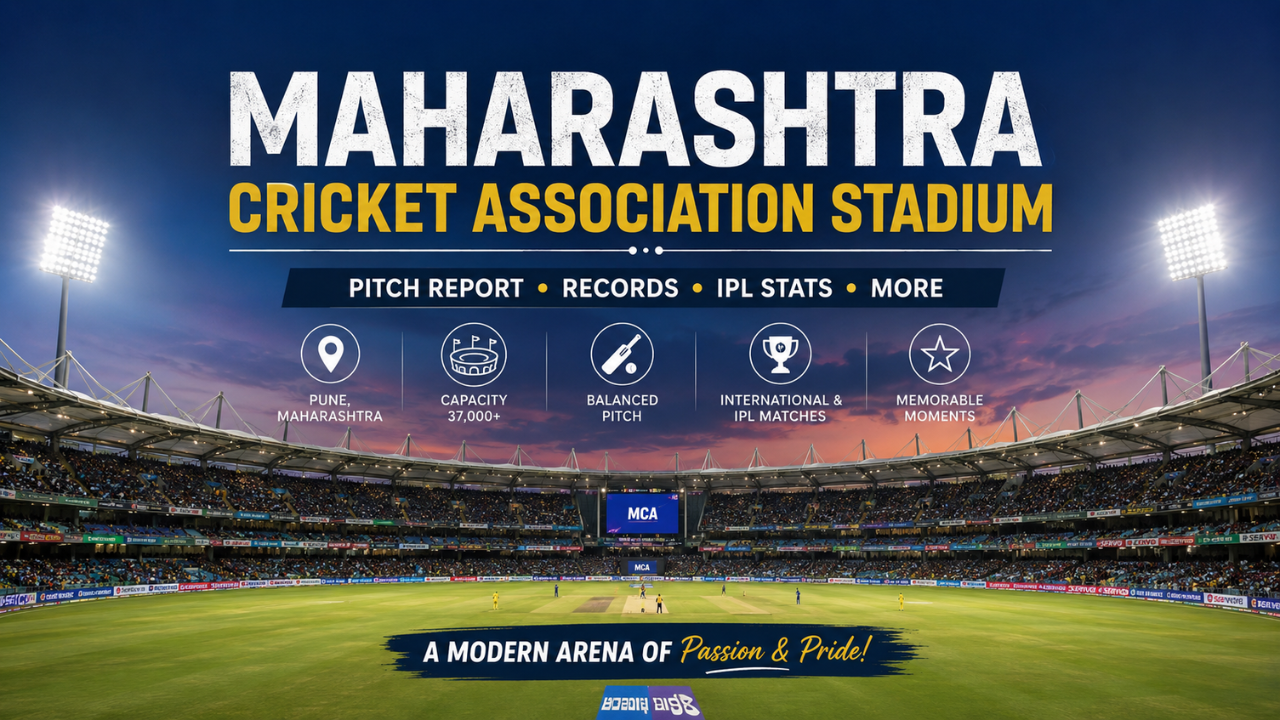
There is no shortage of iconic venues in India when it comes to cricket, but very few have made an impact as quickly as the Maharashtra Cricket Association Stadium. Hidden at the outskirts of Pune in Gahunje village, this stadium has come a long way from being one of the recent additions on India’s cricketing map to its most respected grounds. Whether you’re a hardcore devotee contemplating a visit or just wondering about its history, this guide (Maharashtra Cricket Association Stadium: Everything You Wanted to Know and More) contains everything you would want to know about the Maharashtra Cricket Association Stadium.
| Detail | Information |
| Location | Gahunje, Pune, Maharashtra, India |
| Year Established | 2012 (officially inaugurated April 1, 2012) |
| Seating Capacity | Approximately 37,000 to 42,700 (sources vary) |
| Home Teams | Maharashtra Men’s and Women’s Cricket Teams |
| Ground Shape | Deep bowl, round boundary |
| Pitch Type | Black soil, generally batting-friendly with spin assistance |
| First IPL Match | Pune Warriors India vs Kings XI Punjab (2012) |
| First T20I | India vs England (December 2012) |
| First Test Match | India vs Australia (February 2017) |
| 2023 World Cup Matches Hosted | 5, including India vs Bangladesh |
Prior to the advent of this ground, Nehru Stadium in the heart of Pune was where Maharashtra played its home games and it hosted whatever international fixtures came Pune’s way. The deal, however, fell through due to a disagreement between the Pune Municipal Corporation and the Maharashtra Cricket Association on ticket sharing. That led to such high tensions that an India-Sri Lanka game of significance was moved away from it to Kolkata. If that episode made it clear the association needed a ground they could entirely control, the wheels were in motion for construction on the Maharashtra Cricket Association Stadium soon after.
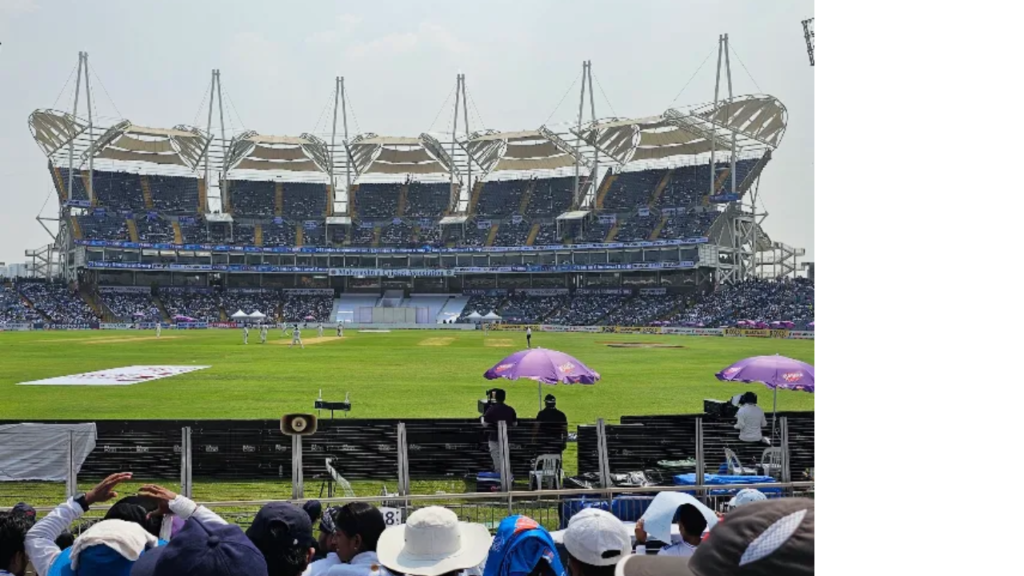
The result is one of the most architecturally unique grounds in the country. The 20,000-capacity arena was designed by British architect Michael Hopkins and covered the ground around the building in a deep bowl shape, a design that offers continually excellent sightlines from almost any seat while also creating an impressive silhouette than seen from above.
Maharashtra Cricket Association Stadium seating capacity, there are different sources regarding the number of seats, some sites say it is just over 37,000 and some love it more than 40 a little will change by configuration. The number may vary but it is still one of the biggest cricket stadiums in India, easily housing tens of thousands for big-ticket matches like IPL playoffs. Its bowl-shaped design efficiently accommodates as many people as possible, producing a crescendo of noise in tightly packed matches.
Also Read: Arun Jaitley Stadium | JLN Stadium | Rawalpindi Cricket Stadium
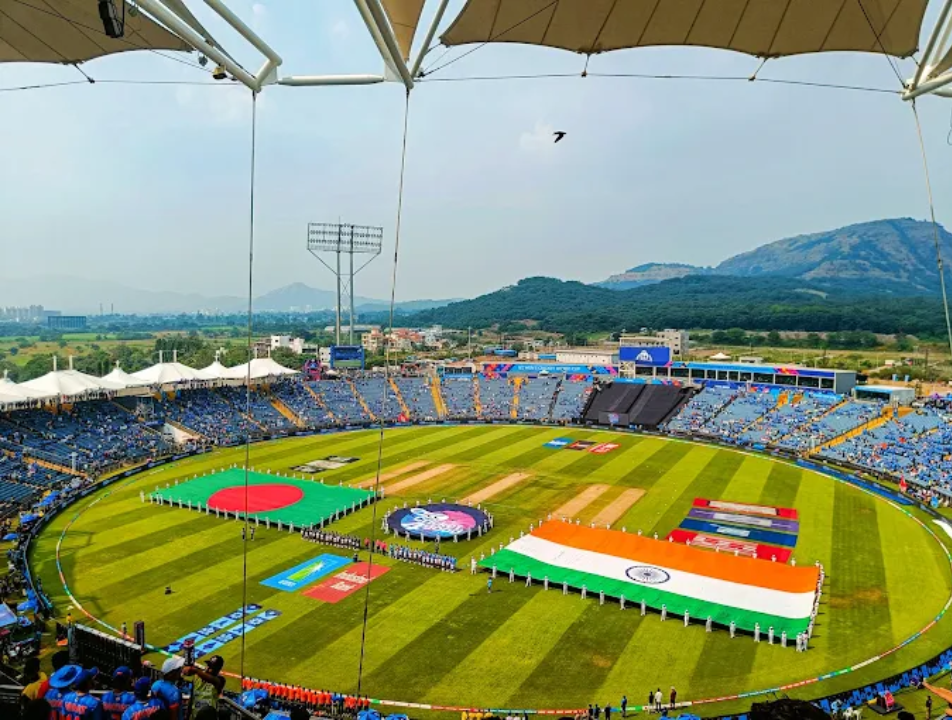
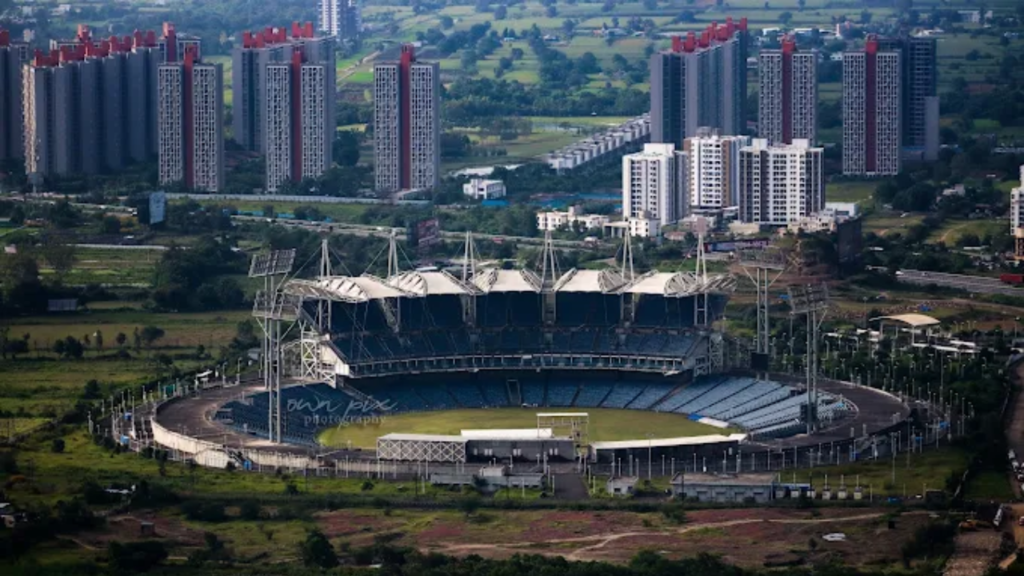
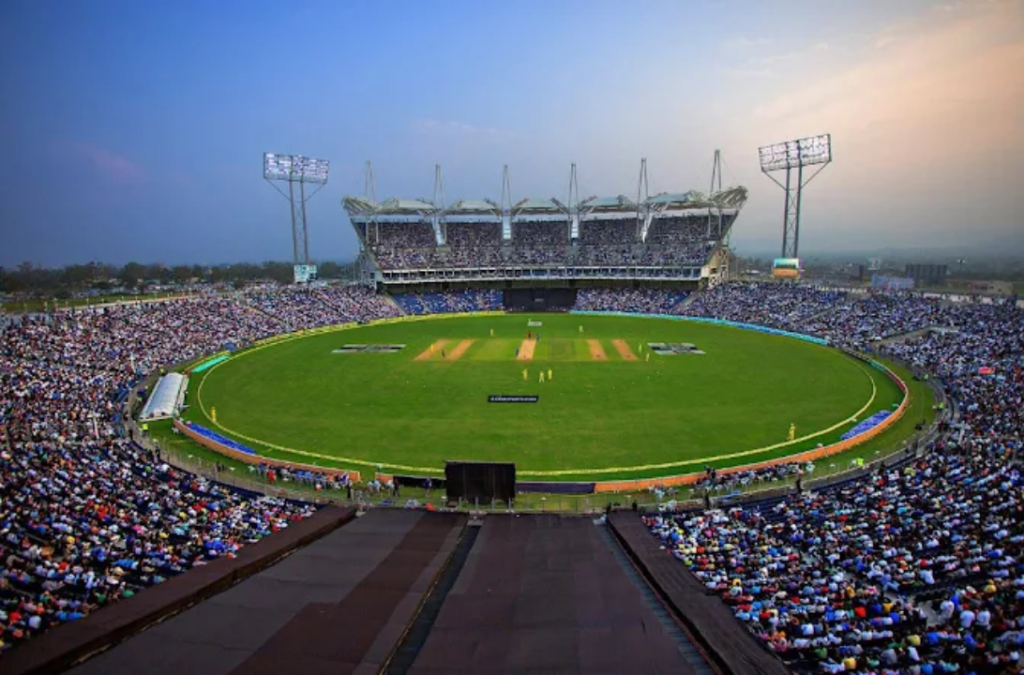
Surprisingly, what is now formally known as the Maharashtra Cricket Association Stadium has not always been called that. Sahara India Pariwar bought the naming rights in 2013, and it was known as the Subrata Roy Sahara Stadium for a time. That arrangement didn’t last, however. Sahara had initially paid close to ₹200 crore for its rights, but after making partial payments, authorities returned to the original name. Today, fans and broadcasters just call it by its title – officially announced as the tournament’s name and a moniker connected to the governing body that constructed its facility.
Ground’s cricketing journey started even before its formal opening. It has also hosted a Ranji Trophy match between the hosts Maharashtra and Himachal Pradesh in December 2011, aside from some practice matches. It was formally opened a day later, on April 1, 2012, under the supervision of then-ICC president Sharad Pawar. Only days later, it hosted its inaugural Indian Premier League game, between Pune Warriors and Kings XI Punjab – the start of a long history with T20.
The venue has gradually step-added milestones across all formats since that debut. India played its first T20 International match in December 2012, against England. Test cricket took a bit longer with the Maharashtra Cricket Association Stadium getting its first Test in February 2017; it was part of a four-match series against Australia. It was a particularly memorable Test; Smith became the first batter to score a ton on the ground and Steve O’Keefe took six scalps in each innings as Australia cruised to 333-run victory.
The venue’s growing prestige would eventually secure it a place on the biggest stage of cricket. The stadium hosted five matches in the 2023 ICC Cricket World Cup, including a much-anticipated India vs Bangladesh match (after missing out on hosting duties for the 2011 edition of the tournament due to construction overruns).
| Format | Record Category | Detail |
| Test | Highest Team Score | 610/6 declared, India vs Sri Lanka |
| Test | Lowest Team Score | 107, South Africa vs India |
| Test | Best Bowling Figures | 8/60, Ravichandran Ashwin |
| Test | Top Individual Score | 254*, Virat Kohli |
| IPL | Total Matches Hosted | 51 |
| IPL | Highest Team Total | 211 |
| IPL | Lowest Team Total | 73 |
| IPL | Total Sixes Recorded | 602 |
| T20I | Matches Hosted | 5 |
| T20I | Total Runs Scored | 1,588 |
Maharashtra Cricket Association Stadium is one of the Indian cricket venues that has hosted most different IPL franchises. Over the years, Pune Warriors India hosted their home games here, Rising Pune Supergiant played all of its home fixtures here and Chennai Super Kings also used this ground for one season. Such a revolving door of franchises has established it an idiosyncratic niche in IPL folklore.
It has also been the home of a more recently-established domestic competition: the Maharashtra Premier League, which held its first season in 2023 between six teams run by the Maharashtra Cricket Association.
Following cricket closely enough, you understand that it can be more or less determined by the conditions of the pitch and this surface has an impression of its own. The pitch, surface made of black soil, usually provides limited bounce which gives batters an opportunity to play through the line but still allows the spinners room to get turn and grip as the game goes along. In fact that balance has tended to favour fairly competitive contests, particularly in the longer format where spinners have always created a larger number of wickets.
The focus then shifts to batters in the case of white-ball cricket. The Maharashtra Cricket Association Stadium has consistently generated high scores in limited-overs matches, with several ODIs surpassing the 300-run mark and many T20 games also seeing explosive run tallies.
The ground has produced many high points in individual performances during more than a decade of international cricket. While one of the highlights there includes Virat Kohli’s unbeaten 254, which continues to be a talk even today, Ravichandran Ashwin has established himself as one of the leading wicket-takers at this venue. The combination of some performances and evenly balanced conditions has played a role in establishing the tactical nature of wickets offered at Maharashtra Cricket Association Stadium.
It’s a stadium that has its fair share of history – but the more modern amenities have also helped. Floodlights enable day-night matches, an essential yardstick for any venue with hopes of hosting limited-overs internationals and IPL fixtures on a regular basis. There are also fully equipped facilities for players, print and broadcast quality media areas and along with multiple entrances that allow the day of the match at the time.
If you’re a fan visiting from out of town tickets are usually available online through the usual big ticketing platforms where many very popular fixtures often sell-out still in advance (the venue is petite).
Over a decade since it opened, the Maharashtra Cricket Association Stadium has cemented itself as one of India’s go-to cricketing venues. Test cricket, World Cup fixtures, IPL thrillers and now a burgeoning domestic league; and they’ve managed to evoke a reputation for fighting competitive conditions. From a piece of land forged in the fires of a scheduling dispute to one that has become a staple on cricket’s biggest stages, its ascent speaks to careful planning, constant investment and the ever strong love for cricket amongst thousands across Maharashtra.
Also Read: Optus Stadium | HPCA Stadium | Wankhede Stadium
The journey of Maharashtra Cricket Association Stadium from a controversial beginning to being one of the venues for the World Cup this year goes on to show how micro and macro Indian cricket infrastructure has evolved in the last decade. Add a unique bowl-shaped structure, a bat-friendly pitch without being spin-friendly, and a regular supply of high-profile matches to watch here make it a ground worth keeping an eye on whether you are at home or attending the match as a spectator.
British architect Michael Hopkins of the London-based firm Hopkins Architects designed this unique bowl-shaped structure.
The opening ceremony was held on April 1, and was attended by ICC President Sharad Pawar.
Yes, for a short period when Sahara India Pariwar purchased naming rights in 2013, it was called the Subrata Roy Sahara Stadium before returning to its original name.
In February 2017, the team played its inaugural Test match (against Australia).
It has been used as a home ground at various times by Pune Warriors India, Rising Pune Supergiant and Chennai Super Kings.